National Podcast Post Month Day 23 BONUS: Doctor Who Day

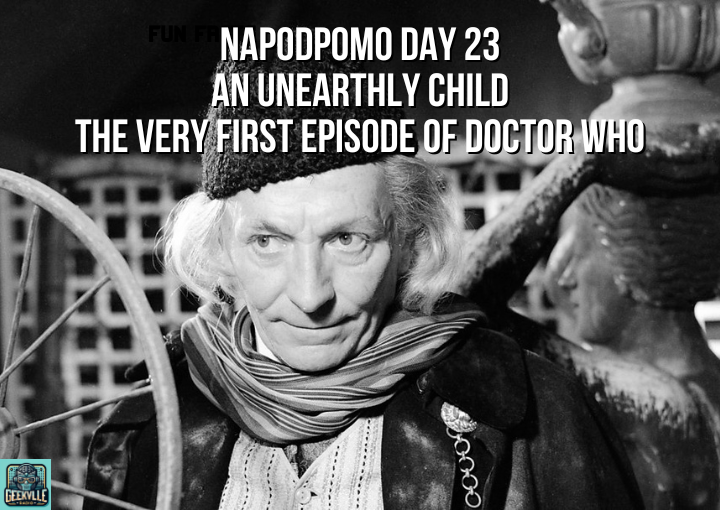
NaPodPoMo Day 23 brings us back to the TARDIS once again to look at where it all began. It’s not one but TWO encore presentations of Examining The Doctor, where we look at the very first episode of Doctor Who that aired 62 years ago today. As a bonus, we also present commentary for the unaired pilot episode.

Continue reading National Podcast Post Month Day 23 BONUS: Doctor Who Day

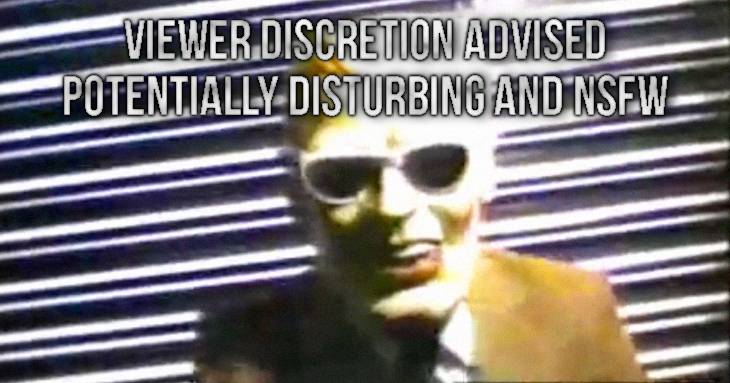
37 Years Ago Today: The Max Headroom TV Hijacking Incident

November 22, 1987: Gas was 90 cents per gallon, The Running Man was #1 at the box office, Dirty Dancing topped the Billboard album charts, and Chicago residents had a very weird and possibly creepy once-in-a-lifetime TV event…

That evening, two separate cases of signal piracy occurred. The first instance happened to Chicago’s famous WGN Channel 9 TV station. However, this was during the local 9 PM News and not part of the national Superstation feed. An unknown individual managed to hijack the TV feed and broadcast a video wearing a Max Headroom mask.

This seemingly normal TV news segment turned very weird and potentially creepy

Then a few hours later, another hijacking happened. This time, it was on Chicago’s PBS affiliate, WTTW Channel 11. It also happened during a broadcast of the 1977 Doctor Who story Horror Of Fang Rock.

This late-night incident is even creepier and possibly NSFW

Max Headroom, portrayed by actor Matt Frewer, was a viral sensation at the time thanks to a cult-favorite TV movie and many Coca-Cola commercials. He even hosted shows on MTV for a while. Thus, masks were a popular thing that year, especially for Halloween costumes.

It’s also worth noting that TV was vastly different than it is today. Regular network television was broadcast to analog antennas, not like the encrypted digital signals we have today. This was also long before the internet, let alone streaming services, became commonplace.

Now, 37 years later, the identities of the perpetrators remain unknown. The case was never officially solved, though many theories and tributes have surfaced since.

National Podcast Post Month Day 15: WrestleMania I (1985) – Classic Wrestling Memories

We’re stepping back into the ring for NaPodPoMo Day 15. This edition of Classic Wrestling Memories from 2020 looks at the VERY FIRST WrestleMania in 1985. Not only do Seth and Train discuss the event itself, they also talk about the “Rock & Wrestling/Hulkamania Era” that led up to the history-making event.

8:35 – The WWF Goes National

Vince McMahon began his national expansion for The World Wrestling Federation in 1984. He spent the year assembling an all-star roster from several of the competing territories. The biggest acquisition, of course, was Hulk Hogan. Hogan had already established himself as an international star by working in Verne Gagne’s AWA and New Japan Pro Wrestling, and by having a memorable role as Thunderlips in Rocky III.

15:03 – The Rock n’ Wrestling Connection

It’s common knowledge that Vince used the “Rock n’ Wrestling Connection” branding during the expansion. Live specials aired on MTV that utilized Cyndi Lauper. Hogan made media appearances all over the country. Vince created Tuesday Night Titans for USA Network. He even bought the coveted 6:05 PM Saturday Night timeslot that had become a staple on TBS. Legendary manager Lou Albano appeared in Lauper’s “Girls Just Wanna Have Fun” music video. This lead to an onscreen confrontation between the two. Albano was a heel at this time, and he played the part of a male chauvinist. The two agreed to a match with each one hand-picking their wrestlers. Albano chose WWF Women’s Champion The Fabulous Moolah, while Lauper backed Wendi Richter.

26:10 – Enter Roddy Piper

Roddy Piper debuted in the WWF in early 1984. However, he did not wrestle regularly for several months. This was due to an ear injury suffered at Starrcade in a match with Greg Valentine. Since he couldn’t wrestle, he acted as “Mr. Wonderful” Paul Orndorff’s manager. He also hosted Piper’s Pit, his talk show which often led to matches and angles on TV. By the end of 1984, Piper had become the top heel in the promotion. The Rock n’ Wrestling Connection was in full swing, so Piper naturally claimed that he hated rock music and insisted on playing bagpipe music. In December of 1984, the first shot was fired which would lead to WrestleMania. Dick Clark, another legit A-Lister in the entertainment world, presented Albano with a gold record award at Madison Square Garden. Piper, Orndorff, and Bob Orton Jr. crashed the party and smashed Albano with his own award. During the melee, Piper also managed to kick Lauper in the head. Hogan ran out to make the save.

41:10 – The War To Settle The Score

The biggest angle leading into Wrestlemania happened on February 15th, 1985 on MTV called The War To Settle The Score. This saw Piper and Hogan collide with the WWF Championship on the line. Hogan brought his friend Mr. T to sit at ringside. The match erupted into strikes right off the bat. No lockups. No staredowns. Orndorff and Orton again interfered, resulting in a disqualification. Mr. T ran in to make the save.

47:00 – The Road To WrestleMania

By this time, The WWF had gathered considerable national attention. There was this nexus or dichotomy, whatever you want to call it, with the top babyface in Hogan, and a legit top Hollywood star in Mr. T, against the two top heels. It made pages of Sports Illustrated. Hogan and T hosted Saturday Night Live.

On the heel side, what was real and what was worked may be clouded but there were countless stories of Roddy Piper not liking the outsider in Mr. T coming into the wrestling world. T went on record saying that he didn’t hate Roddy, but there was animosity between the two.

56:30 – Filling Out The Undercard

The main event of Hogan & Mr. T vs. Roddy Piper & Paul Orndorff was set. As was the semi-main of Wendi Richter challenging Leilani Kai for the Women’s Championship. As for the undercard, Bobby Heenan had recently made his WWF debut alongside Big John Studd to feud with Andre The Giant. The US Express of Barry Windham & Mike Rotunda (years before he was I.R.S.) defending the tag titles against Nikolai Volkoff & The Iron Sheik (w/ Freddie Blassie). Junkyard Dog challenged Greg Valentine for the IC Title, despite Valentine’s feud being with Tito Santana. Brutus Beefcake faced David Sammartino, who was accompanied by his legendary father, Bruno. Ricky Steamboat faced a pre-Doink Matt Borne. King Kong Budy (fresh off his run in Mid-South) faced SD Jones in the longest nine seconds in the history of time.

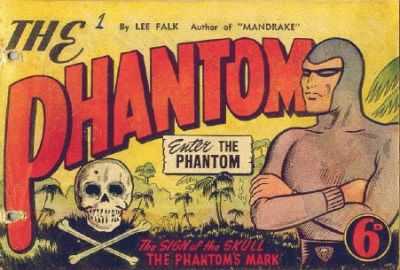
National Podcast Post Month 2025 Day 14: The Phantom

Day 13 of NaPodPoMo 2025 is another entry into our Lesser Known Geek Hall Of Fame. Seth and Crazy Train talk about another superhero pioneer, The Phantom! How pioneering? Many superhero tropes can be traced back to The Ghost Who Walks.
Continue reading National Podcast Post Month 2025 Day 14: The Phantom

National Podcat Post Month 2025 Day 13: Tributes to Stan “The Man” Lee and Legendary Musician Roy Clark

Two legends in their respective fields passed away seven years ago this month in the form of Stan Lee and Roy Clark. Stan Lee was, of course, the major force behind Marvel Comics for decades and created some of the most popular superheroes of all time. Roy Clark was a legendary country musician, perhaps best known as one of the regulars of the musical comedy series Hee Haw.

Continue reading National Podcat Post Month 2025 Day 13: Tributes to Stan “The Man” Lee and Legendary Musician Roy Clark

National Podcast Post Month 2025 Day 12: The Monkees – Nostalgia Trip

The Monkees were a made for TV band in 1966, partially in response to BeatleMania and the successful movie A Hard Day’s Night. They were all cast and given band member roles by the studio. They were not a band that formed organically. As such, there have been misconceptions and misinterpretations about the group over the years. This show hopes to straighten out some of those misconceptions.

THE MONKEES

Micky Dolenz – Born in LA in 1945, he grew up in an entertainment family. Micky broke into showbiz at the age of 11 when he starred in a children’s show called Circus Boy under the name Micky Braddock. While he could play guitar, he wound up being cast as the drummer for the TV show. Due to a medical condition, he set up his drum kit in a unique way. The bass pedal was set up for left-handed playing, while the rest of the kit was set up for right-handed playing.

Dolenz could also be considered the one who stayed the most active after The Monkees broke up. He did continue acting and making music. In the 1970’s Micky auditioned to be Fonzie before the role was given to Henry Winkler.

Perhaps his most well-known role outside of The Monkees is the voice of Arthur from the original 1990s animated series The Tick.

Dolenz, of course, sang lead for the band’s first hit, “Last Train To Clarkesville”, which many people may not know is about a man shipping off to fight in the Vietnam War. But a song that was almost entirely his brainchild, “Randy Scouse Git”, appeared on Headquarters. That song had to be renamed in UK releases due to the vulgar nature of the term (it translates to “horny British boy”).

https://youtube.com/watch?v=ejw_LOi-nhk%3Ffeature%3Doembed

Davy Jones – The youngest of the groups, born in December 1945 in Manchester. Arguably the most popular, especially with the ladies. He usually wound up singing the romantic ballads as a result. Usually depicted onscreen as a percussionist, carrying a tambourine or maracas.

Davy did have some measure of fame before being cast in The Monkees. He was a professional singer who had received awards for live musicals. He also appeared on the very same episode of The Ed Sullivan Show that introduced The Beatles.

Jones will probably be best remembered for singing what may be The Monkees’ biggest hit, “Daydream Believer”. That appeared on the fifth and final album of the series, The Birds, The Bees, & The Monkees.

https://youtube.com/watch?v=xvqeSJlgaNk%3Ffeature%3Doembed

Sadly, Davy passed away in February 2012 of a heart attack.

Peter Tork – Born in Washington DC in February 1942, Peter was the oldest of the four. Tork wound up playing the “straight man” of the group, and would often be setting up the jokes rather than making them himself. His father was a college professor, and Peter himself has always been a bit of an intellectual.

He started playing piano at age nine, and went on to learn several other instruments. While he was a young man, Peter befriended then aspiring musician Stephen Stills, mostly known for Buffalo Springfield, and being the Stills in Crosby, Stills, Nash, & Young. As luck would have it, Stills had auditioned to be a Monkee before Peter knew about the opportunity. Stills was rejected due to not being photogenic enough for TV. Stills then recommended the creators look at Peter Tork. “And the rest” Tork would say “is a hysterectomy”

In a bit of irony, Tork may have been the one with the greatest amount of musical talent. Yet onscreen he was cast as being a bass player. Plus, his role in the show was more of a straight man who could be fooled, despite being a real life intellectual.

Tork is probabably the one that sang the least often. In fact, only one Monkees song from the original run featured Peter on lead vocals. That being “Your Auntie Grizelda” off the second album More Of The Monkees.

https://www.youtube.com/watch?v=rp_eI23YFZY

That said, it’s worth noting that Peter did help write a few songs. Most notably “For Pete’s Sake” which became the closing theme music, though it’s commonly misidentified as “In This Generation”. He also did the music arrangement for arguably their biggest hit, “Daydream Believer”.

https://youtube.com/watch?v=pHFuJwWmsAo%3Ffeature%3Doembed

Michael Nesmith – Born on December 1942 in Texas, Nesmith is a bonafide  southerner. Though cast as a quieter goofball,  he often wound up being the smartest guy in the room.

Nesmith had recorded songs previously under the name Michael Blessing, and had experience writing songs. One of his songs was “Different Drum”, which became a hit for The Stone Poneys that launched the career of a young Linda Ronstadt.

Mike’s onscreen gimmick was his constant wearing of a snowcap. He wore the cap during his audition, and the producers liked the look. In reality, Mike truly grew to hate the snowcap look. He and Peter Tork were also the ones most vocal about wanting to play their own instruments

After The Monkees, Nesmith became quite the renaissance man. He started a video company that produced movies and comedy videos like Elephant Parts. In 1980, he started a TV show called PopClips, which would wind up being the direct precursor to MTV. On top of that, his mother had created the solution that would become Liquid Paper.

Among some of the Hollywood films Nesmith produced are Repo Man and Timerider.

Nesmith’s song “Papa Gene’s Blues” was one of the rare exceptions on the first album to be written and produced by a band member.

https://youtube.com/watch?v=ZkL-w7Q1gvw%3Ffeature%3Doembed

MUSIC

While everything started with a TV sitcom, music was produced simultaneously by producers like Don Kirschner. Professional songwriters were used to write most of the songs on the first two albums. A lot of the music was recorded by the infamous studio group The Wrecking Crew for the first two albums.

It is true is the band did not play instruments on the first two albums, The Monkees and More Of The Monkees. The reasons why were simple. One, they were doing the TV show, and for productions’ sake, they could just go into the studio and lay down vocals rather than spend the extra time rehearsing. And two, the songs needed to sound like a band that had been together for years. And guys that just met each other the same year just flat out aren’t going to be in sync, let alone do much songwriting.

The onscreen depiction of the band had Mike on guitar, Micky on drums, and Peter Tork on bass. The irony is Peter Tork may have been the most musically inclined of all of them. Davy was usually depicted as percussion (tamborine or maracas), but he did play instruments here and there. Micky did have to learn drums, as he was more of a guitarist. Davy had told the story that when they were asked who is going to be the drummer, he, Mike, and Peter all took a step back leaving Micky alone”.

Communication about when the albums would be released and what singles would be used was not discussed much between the label and the band. There was an infamous story of The Monkees doing live appearances shortly after the first album was released. Fans would tell them “We got your new album”… to which confused the group as they only knew of one album. It turned out the second album More Of The Monkees had been produced and released without their knowledge..

Most of the early hits were mostly written by other songwriters

  • Tommy Boyce and Bobby Hart – “Monkees Theme”, “Last Train To Clarkesville”
  • Neil Diamond – “I’m A Believer”, “A Little Bit Me, A Little Bit You”
  • John Stewart (not THAT John Stewart) – “Daydream Believer”
  • Carole King and Gerry Coffin – “Pleasant Valley Sunday”

Some critics do not seem to consider The Monkees a “real band”, due to them being assembled. But the truth is that type of practice was not uncommon at all in the entertainment business. Studios have assembled singing groups for decades, and it’s still being done to this day. How were The Spice Girls formed? The Backstreet Boys? New Kids On The Block?

The third album, Headquarters, was the first to feature the band playing their own instruments. It is looked at by many music historians as an important album in history due to this fact. By this time, Chip Douglas had been hired as producer. He also took over most of the bass playing. The album sold well, though subsequent albums sold significantly less than these first three.

The Monkees themselves had said if they could do it over again, the lineup would be Peter on guitar, Mike on bass, Davy on drums and Micky as a frontman. That would have played to all their strengths. The music video to the song “Words” depicts this lineup.

TV SHOW

The show ran for two full seasons from September 1966 to March of 1968. The show declined in the second season, due to the reaction that the boys weren’t really a band. In addition, there were creative differences. The band wanted to do more than just screwball comedy and wanted to turn the show into more of a variety show. During that time, variety shows like The Ed Sullivan Show were extremely popular.

Some of the musicians who auditioned for the show did wind up with succesful music careers. There was the aforementioned Stephen Stills, as well as Paul Williams.

Here is a highlight reel of the auditions and screen tests the guys went through

HEAD

The group made their first and only feature film in 1968. Head was releaseed to change the band’s image. In fact, there was a marketing campaign that didn’t even mention the band was in the movie. The opening scene of the band jumping off the bridge was to symbolize the “death and rebirth” of their careers. Jack Nicholson (yes THAT Jack Nicholson) helped write and produce the film. The title Head came about because if there was a sequel, it would be marketed as “From the people that gave you Head”.

The movie is notable for having several different cameos. Among the celebrities who appear:

  • Green Bay Packers Linebacker Ray Nitschke has a cameo playing a football player in the trenches of Vietnam.
    • Teri Garr in her first feature film
    • Sonny Liston in a boxing match with Davy
    • Annete Funicello as a spectator in said boxing match
    • Ronald Reagan, then Governor of California, in a news clip
    • Jack Nicholson and Dennis Hopper as film crew
    • Tor Johnson as a guard (his final onscreen appearance)

While Head may have been a colossal failure at the box office, it would up gaining cult status for its outlandishness. From a musical standpoint, it did feature a live rendition of the song “Circle Sky”, in which they sing and play every note in one take.

https://www.youtube.com/watch?v=aWi_63q58CQ

In closing, there is an opinion from many fans that The Monkees are worthy to be included in The Rock And Roll Hall Of Fame. Only time will tell if that opinion will become fact.

National Podcast Post Month 2025 Day 11: The Gold Dust Trio – Classic Wrestling Memories

We’re stepping back in the ring for NaPodPoMo Day 11, but this time we’re going OLD SCHOOL!. In fact, the OLDEST OF OLD SCHOOL!

Continue reading National Podcast Post Month 2025 Day 11: The Gold Dust Trio – Classic Wrestling Memories

National Podcast Post Month Day 10: The Shadow (Replay)

We’re replaying one of our personal favorite episodes for NaPodPoMo Day 10. The Shadow was the inaugural inductee into our Lesser Known Geek Hall Of Fame. Hear how he influenced many of the Superhero A-Listers, including a certain other really rich guy who runs around at night…

Continue reading National Podcast Post Month Day 10: The Shadow (Replay)

National Podcast Post Month Day 9: Destiny of the Daleks Part 2 – Examining The Doctor #110

We step back into the TARDIS for NaPodPoMo Day 9. Mark and Seth tackle Part Two of the Tom Baker story, Destiny Of The Daleks.

Continue reading National Podcast Post Month Day 9: Destiny of the Daleks Part 2 – Examining The Doctor #110

National Podcast Post Month 2025 Day 8: The Superhero Bowl

Flashback to 2015 for some football fever superhero talk. Seth “Zandrax” Zillmann, “Crazy Train” Jonathan Bolick, and “Uncle Greg” Ochaba make a football team entirely out of superheroes (AND villains). It’s a perfect discussion for fellow comic book fans at a Big Game Party.

Could Thor play Quarterback? Should Hulk be Offensive or Defensive line?

All these positions and many more in this Flashback Episode of Geekville Radio!